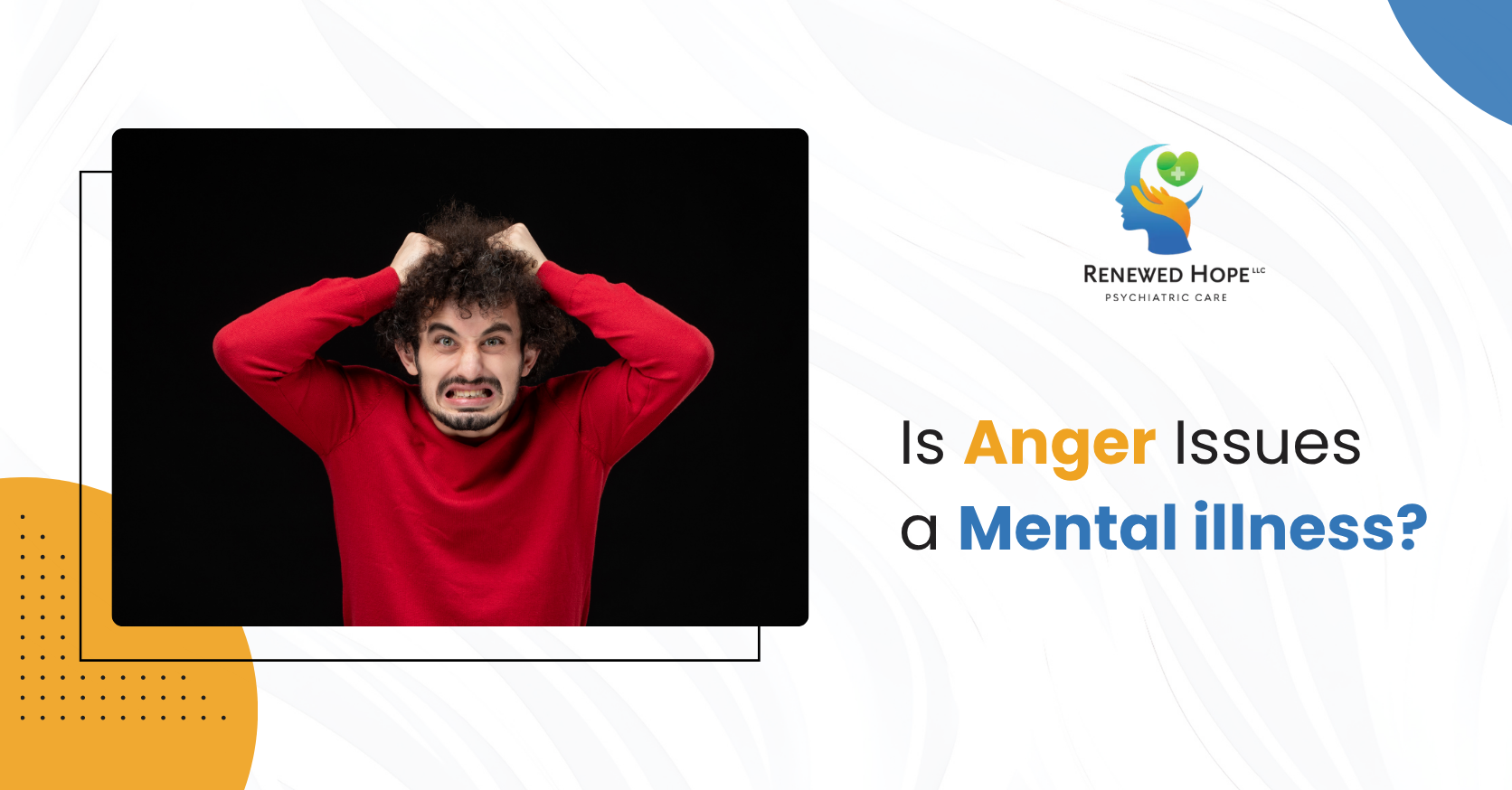
Anger is a natural human emotion. Anger is a natural human emotion.
Everyone experiences anger at some point in life, whether due to stress, disappointment, feeling hurt, or facing unfair situations.
In most cases, anger is temporary and manageable. However, when anger happens often, is very strong, or hard to manage, it can hurt relationships, work and your overall health. This is often referred to as “anger issues.”
At Renewed Hope Psychiatric Services, we help people understand their feelings. We also guide them to build healthier responses. Our care is compassionate and based on proven methods.
So, is anger issues a mental illness and how do you know if someone has anger issues? Let’s explore.
What Are Anger Issues?
Anger issues mean a person finds it hard to control their anger.
It is not about getting angry once in a while. It means getting angry again and again in a strong way.
A person with anger issues may:
- Get angry very quickly
- Get upset over small things
- Find it hard to calm down
- Say or do things they later feel sorry for
- Have problems with family or friends
Anger issues can happen to kids, teens and adults. It does not mean someone is a bad person.
Is Anger Issues a Mental Illness?
Anger issues are not always a mental illness.
Most of the time, anger is a sign of something deeper. It can be a symptom, not the main problem.
Anger can be linked to different mental health conditions, such as:
- People who feel sad (depression) may get angry easily
- People who feel worried (anxiety) may get upset quickly
- People who had scary or hard experiences (trauma) may feel strong anger
- Some people have mental health-related issues that may affect their mood and make them angry or irritable
- Some have dysregulated emotions or access to alcohol or drugs that can exacerbate anger
Some may also suffer from a disorder known as Intermittent Explosive Disorder. It also refers to a sudden and intense anger response that is uncontrollable.
So, anger is not always a mental illness by itself. It can be a sign that someone needs help and care.
A proper anger issues diagnosis at Renewed Hope Psychiatric Services finds the root cause of anger, not just the surface feelings.
What Are Anger Issues Symptoms?
Anger affects people differently. Common signs someone has anger issues include:
- Getting angry often
- Yelling or shouting
- Breaking things
- Feeling very upset quickly
- Trouble thinking clearly when angry
- Feeling sorry after getting angry
Physical symptoms may also appear, such as:
- Rapid heartbeat
- Tight chest
- Muscle tension
- Feeling overheated
Frequent symptoms harm mental and physical health and relationships.
Anger Issues Causes
There is no single cause of anger issues. Instead, multiple factors may contribute, such as:
- Too much stress
- Family problems
- Bad or sad past experiences
- Not enough sleep
- Mental health problems
- Trouble talking about feelings
Often, anger is a “secondary emotion.” At Renewed Hope Psychiatric Services, we help patients uncover whether sadness, fear, or frustration is underneath the anger response.
Is Frustration a Form of Anger?
Frustration and anger are closely related but not identical.
- Frustration occurs when goals are blocked or visions are obstructed
- Anger develops when frustration intensifies or continues over time
When frustration is not addressed and controlled, it can lead to anger and emotional outbursts.
How Long Does Anger Last?
Anger lasts for different lengths of time.
- A few minutes for small problems
- A few hours after a fight or stress
- Days, if someone keeps thinking about it
- Even longer if feelings are not solved
Ongoing anger raises stress. It can hurt your sleep, heart health and relationships.
When Anger Becomes a Mental Health Concern
Anger turns into an issue when it begins to dominate existence.
It may be time to get help if:
- Anger happens very often
- Relationships are getting worse
- School or work is affected
- A person feels out of control
- There is regret after anger episodes
Talk to a professional when anger reaches this level.
Treatment for Anger Management
At Renewed Hope Psychiatric Services, we help people learn how to understand and control their anger healthily.
Our anger management support includes simple steps:
- Identifying personal triggers that lead to anger
- Understanding why you feel angry (like stress or hard experiences)
- Learning new ways to think and stay calm (CBT methods)
- Practicing ways to relax, like breathing slowly
- Learning how to talk about feelings in a better way
Each person gets their own plan based on what they need.
Simple Ways to Control Anger
You can also try these quick techniques:
- Take slow, deep breaths
- Step away from the situation
- Count to ten before reacting
- Drink water and relax your body
- Think before speaking
Small actions can prevent emotional escalation.
Final Thoughts
So, is anger issues a mental illness? Not necessarily. Anger itself is a normal human emotion. Persistent, intense, and uncontrolled anger can signal deeper emotional issues or mental health conditions. These deserve attention.
With the right support, anger can be understood and managed in healthy ways. You don’t have to deal with it alone.
At Renewed Hope Psychiatric Services, we teach people calm and healthy ways to manage anger. We help improve relationships. We also teach better ways to cope with strong feelings.
If anger is a problem, reaching out for help is a good first step.
FAQs
Why do I wake up angry for no reason?
This may be linked to poor sleep, stress, anxiety, hormonal changes, or unresolved emotional issues.
Why do I get mad so easily?
Many factors can play a role. You might be tired, stressed, hungry, or worried. Often, anger comes from feeling hurt or sad. Big life problems or bad memories can also increase anger.