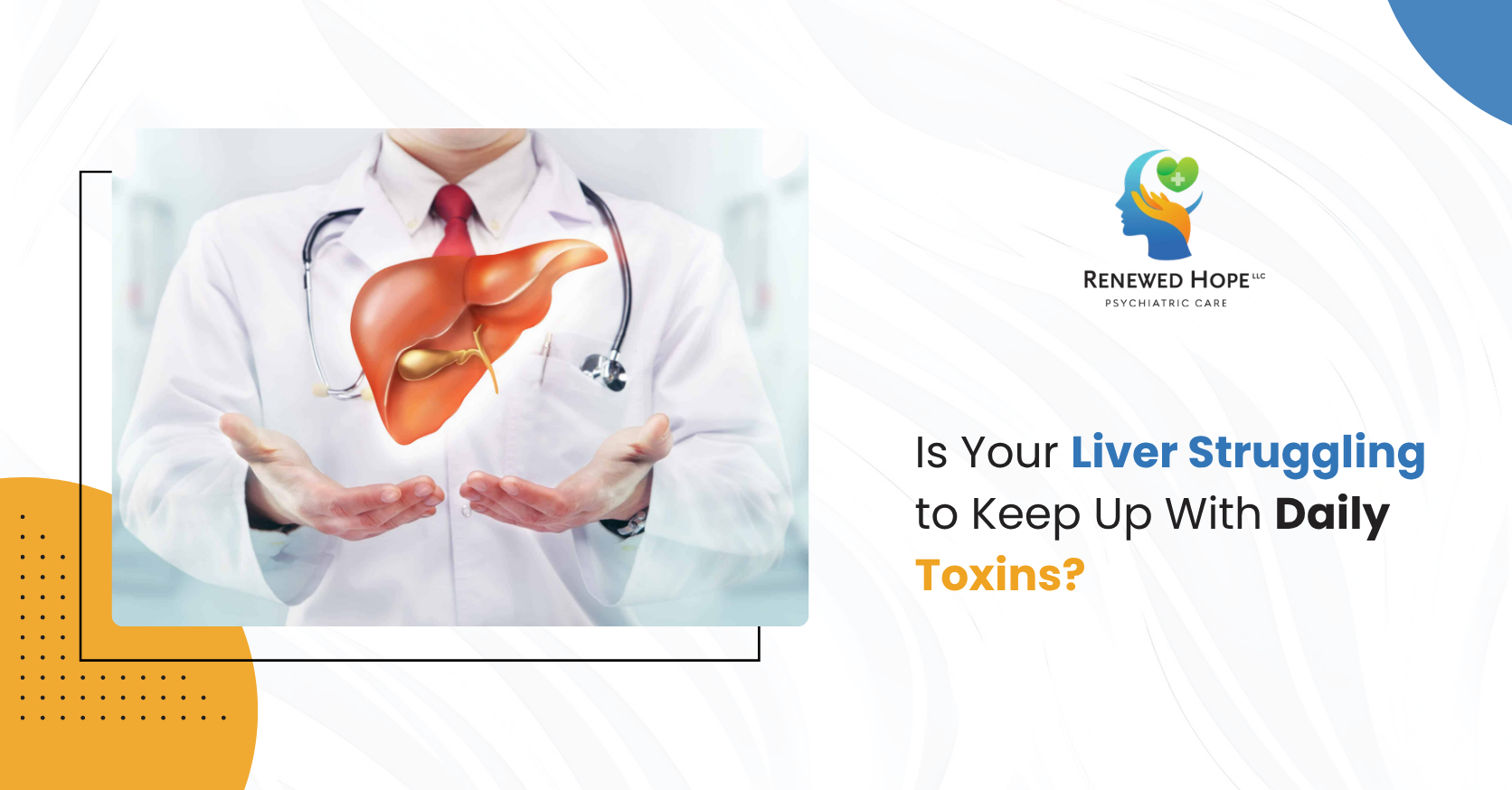
Every day, your body works very hard to keep you safe and healthy. One of the most important organs doing this job is your liver. It cleans your blood, helps with digestion and removes harmful substances from your body.
But in today’s world, we are exposed to many toxins daily from food, stress, pollution and even medications. Over time, this can make people wonder, “Is your liver struggling to keep up with daily toxins?”
This is an important question because your liver does not complain loudly. Instead, it shows small signs that many people ignore.
At Renewed Hope Psychiatric Services, we see health as a whole. We check both emotional and physical health. This way, we can better understand symptoms that affect your life.
How Daily Toxins Affect the Liver
Every day, our bodies process substances that can stress the liver. These include:
- Processed and fast foods
- Sugary drinks and snacks
- Alcohol and certain substances
- Environmental pollution
- Long-term use of some medications
- High stress levels
When these factors accumulate, the liver is compelled to work harder. Over time, this can impede its detoxification process.
A less active liver doesn’t stop functioning altogether; it merely becomes less effective. This can influence several areas of the body, especially the brain and emotional state
Is Your Liver Struggling to Keep Up with Daily Toxins? Early Signs?
The liver does not always show big warning signs. Sometimes the signs are small.
You may notice:
- Constant fatigue even after rest
- Brain fog or trouble thinking clearly
- Mood swings or irritability
- Low motivation
- Poor sleep quality
- Digestive discomfort
- Headaches or heaviness in the head
Many people think these problems only come from stress or anxiety. But sometimes the liver may also play a part.
The Connection between Liver Health and Brain Function
The liver and brain are connected. Toxins that the liver can’t eliminate build up in the bloodstream.
This can impact brain function in various ways:
- Slower cognition
- Trouble concentrating
- Issues with memory
- A sensation of mental “fogginess.”
This phenomenon is often referred to as brain fog. It’s not a standalone illness but an indication that deeper issues may exist in the body.
When the liver is functioning optimally, many individuals experience sharper thinking and improved concentration.
How Liver Stress Impacts Mental Health
Mental health and physical health are deeply linked. When the liver is overloaded, it can influence mood and emotional balance.
People may experience:
- Increased anxiety
- Feelings of sadness or depression
- Irritability without a clear reason
- Low energy and lack of interest in daily life
This may happen because toxins and inflammation can affect the brain.
At Renewed Hope Psychiatric Services, we understand this mind body connection clearly. We know that mental health symptoms are not always only psychological. Sometimes, the body is asking for help too.
Why a Holistic Approach Matters
Holistic means treating the person as a whole and not just a symptom. This is highly significant for the state of a person’s liver and mental health.
At Renewed Hope Psychiatric Services, we focus on:
- Physical health
- Emotional health
- Lifestyle habits
- Stress levels
- Sleep quality
If these areas are evened out, the liver becomes more efficient and the mind becomes clearer.
Ignoring physical health while treating mental health often leads to incomplete healing. That is why we combine both perspectives in our care.
Everyday Habits That Support a Healthy Liver
Small healthy habits can support your liver every day:
- Drinking enough clean water every day
- Eating fresh fruits and vegetables
- Reducing processed food intake
- Limiting sugar and fried foods
- Getting regular physical activity, like walking
- Sleeping at consistent times
- Avoiding unnecessary substances
These habits can help your body feel stronger and healthier.
How Sleep and Stress Affect Liver Function
Poor sleep and high stress can slow down the body’s natural repair process. The liver does much of its repair work during rest.
When sleep is disturbed:
- The body cannot fully recover
- Toxins may build up faster
- Mood becomes unstable
Stress also releases hormones that can affect digestion and liver performance.
That is why we place a strong focus on sleep hygiene and stress reduction techniques in our care approach.
When to Consider Professional Assistance
You might find a professional evaluation helpful if you encounter:
- Chronic fatigue that remains unchanged
- Ongoing trouble with concentration
- Emotional turmoil or shifts in mood
- Disruptions in sleep patterns
- Challenges in handling daily tasks
At Renewed Hope Psychiatric Services, we offer thorough mental health care, which may involve:
- Psychiatric evaluation
- Treatment for anxiety and depression
- Support for sleep and stress management
- Care related to substance use as necessary
- Tailored, holistic treatment strategies
Our method emphasizes a comprehensive understanding of individual well-being.
Moving Toward Better Balance and Clarity
With the right support, many people experience improvements in:
- Energy levels
- Mental clarity
- Emotional stability
- Sleep quality
- Overall functioning
Final Thoughts
If you feel tired, fuzzy-headed, or down a lot, your body is asking for help. The liver is vital, so taking care of it is important in daily life.
These symptoms don’t have to be dealt with by you alone. Under proper care, your system and thoughts may be restored to stability and stamina.
If you or someone you know is experiencing these concerns, seek professional assistance now.
Contact Renewed Hope Psychiatric Services to embark on a journey toward enhanced mental clarity, better physical health and renewed energy.
FAQs
Can the liver repair itself?
Yes, the liver can regenerate healthy cells when damage is not severe.
Do detox drinks clean the liver?
No, there is no scientific evidence that detox drinks improve liver function.