
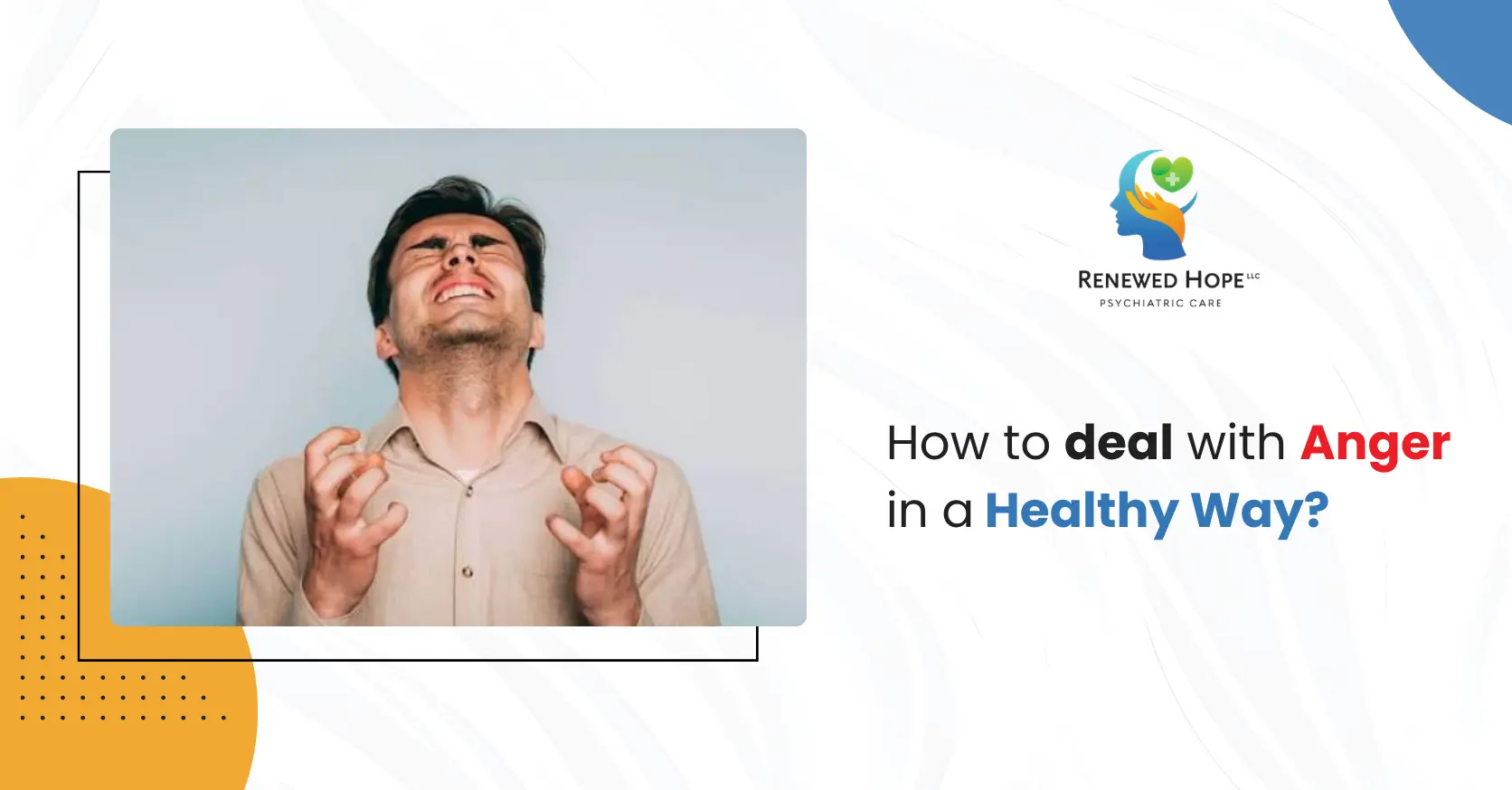
You can handle anger by noticing when your body feels tense, stepping away from the problem and using calm words. If you do not control your anger, it can cause stress for your heart and your mind.
Do little things make you lose your temper? Do you yell at the people you love when you feel stressed? You do not have to let anger ruin your day.
At Renewed Hope Psychiatric Care, we offer anger management and mental health services to help you manage your emotions and promote your overall health.
Keep reading to learn simple tips to help you stay calm and in control.
What Are the Hidden Causes and Physical Signs of Anger?
Anger is rarely a standalone emotion. In clinical psychology, it is frequently called a “secondary emotion” as it is a protective covering for more fragile emotions like fear, rejection, sadness, or profound embarrassment. When you’re always feeling angry at work, you may be feeling unappreciated or overwhelmed.
Anger takes control of your body before you’re even aware of it. Knowing these physical signs can help you intervene before the outburst:
- Rapid heartbeat and increased blood pressure
- Clenched jaw or grinding teeth
- Muscle tension in the neck and shoulders
- A sudden feeling of intense body heat or flushing
- Shallow, rapid breathing
How Do I Calm Down in the Heat of the Moment?
The emotional center in your brain, the amygdala, may take over when you set off on a temper tantrum. The only way to come back to yourself is to calm your nervous system down.
- Take a Timeout
Leave the person or situation that is upsetting. Take a 10-minute walk to allow time for the adrenaline rush to settle.
- Practice Box Breathing
Inhale for four seconds, hold for four seconds, exhale for four seconds and hold empty for four seconds. This helps to drop your heart rate immediately.
- Repeat a Calming Mantra
Slowly repeat a phrase like “Take it easy” or “This will pass” while focusing on relaxing your physical muscles.
- Use Humor
Make the situation funny by visualizing it. Avoid sarcasm, which is simply another form of unhealthy aggression.
How Can I Express My Feelings Without Fighting?
There is no need for you to suppress your anger. You need to show it safely. Speak softly rather than shout or break things.
The results depend on the method you use. Being assertive is the healthiest way to express anger because it expresses your anger without violating the boundary or feelings of the other person.
Using “I” statements is a good way to speak, doctors say. When you use “I” words, you talk about your own feelings. You don’t take the blame on the other person.
Instead of saying: “You never listen to me!” Use them to express: “I feel sad when I think you are not listening.
That causes a spark in the other person to become interested in helping you. It stops fights before they start. You can also write your feelings in a journal. Writing helps get the mad thoughts out of your head and onto paper.
How Do Long-Term Lifestyle Changes Improve Anger Management?
Uncontrolled anger not only means relationship problems, but it also harms your physical health as well.
The American Psychological Association (APA) reports that long-standing anger has been correlated with an increased likelihood of coronary heart disease.
To develop long-term emotional resilience:
- Exercise Regularly
Exercise helps reduce the extra cortisol and adrenaline (contributing to chronic rage).
- Restructure Your Thoughts
Cognitive restructuring is the process of changing thoughts. Don’t use extremist words when you are frustrated: don’t say ‘never’ or ‘always’.
- Prioritize Sleep
Poor sleep makes it very hard for your brain to control your emotions and means you’re easily provoked.
When Should I Seek Professional Help for Anger Issues?
Sometimes, anger feels too big to handle alone. That is okay. You can get help from caring people.
You might need extra help if:
- You get angry every single day
- Your anger scares your family or friends
- You break things when you are mad
- Your anger gets you in trouble at work or school
- You feel out of control
If this sounds like you, our team at Renewed Hope Psychiatric Care can help. We offer anger management services to teach you new ways to cope. Catherine Mepukori and our caring team want to listen to your story. We create a safe space for you to heal.
We can set up comprehensive psychiatric evaluations and talk about psychiatric medication management if needed. You do not have to fight these big feelings by yourself.
Are You Ready to Find Peace?
Do you need a safe space to talk? Our team at Renewed Hope Psychiatric Care is ready to support you.
We offer in-person visits in St. Charles, Missouri. We also offer easy telehealth appointments for people in Missouri and Iowa. We accept most major insurance plans and have simple self-pay rates.
Same-week appointments might be open right now. Call us today at 636-489-3555 ext. 101 to book your visit and rediscover your inner strength.
FAQs
Why do I get angry so easily over small things?
Getting intensely angry over minor inconveniences often indicates underlying stress, exhaustion, or unresolved emotional trauma. When your baseline stress levels are high, even a small trigger can overflow your emotional capacity.
Can anger ever be a good thing?
Yes. Anger is a natural, evolutionary response designed to protect you from danger and injustice. When channeled properly, it can motivate you to set healthy boundaries, advocate for yourself and drive positive social change.