
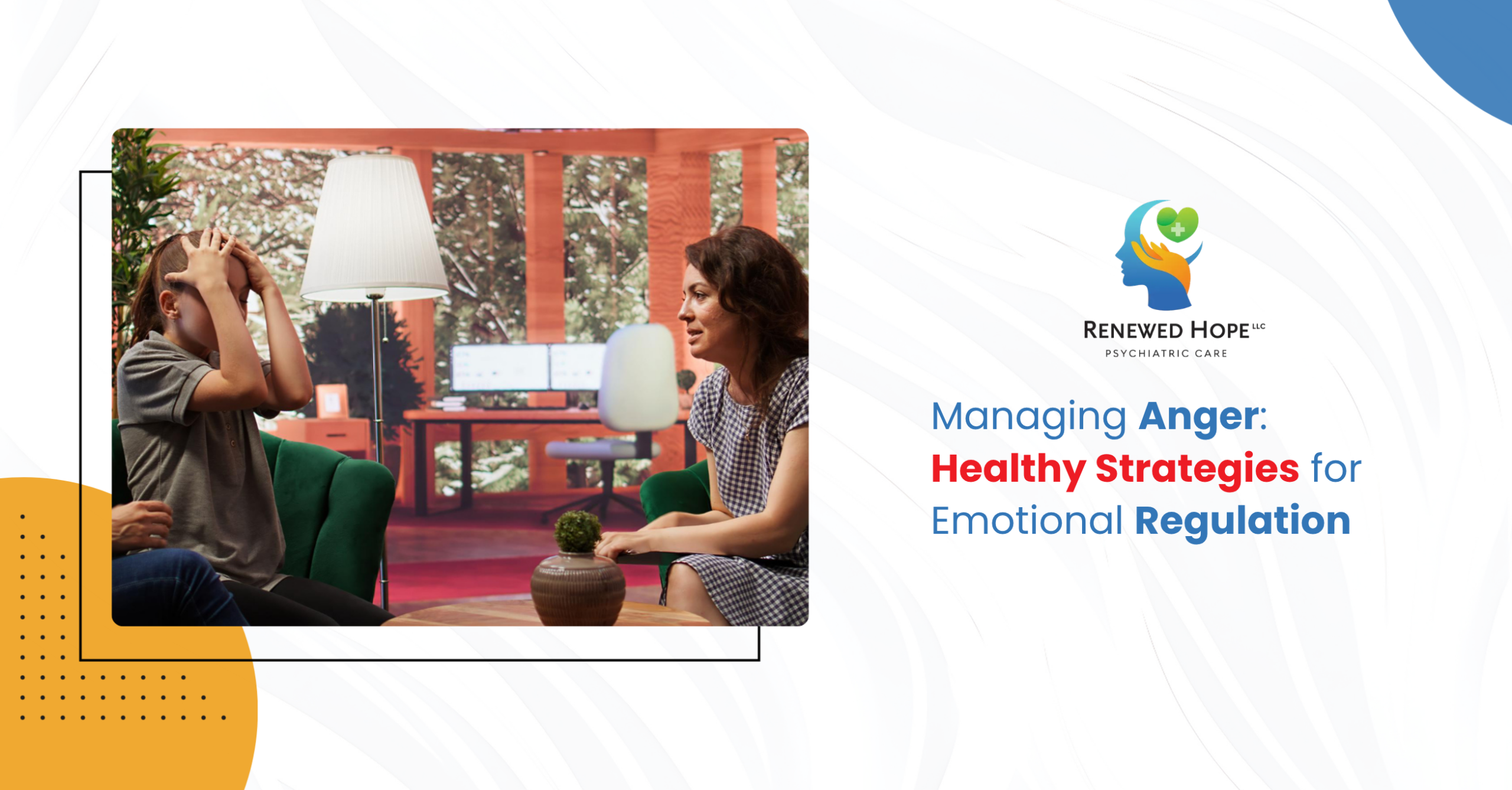
Anger is a natural emotion that everyone feels. It can arise from perceived injustice, fatigue, or hurt feelings. While feeling anger isn’t bad, holding onto it or expressing it poorly can hurt your health, mental well-being and relationships.
Learning how to manage anger helps you stay calm and make good choices. This is called emotional regulation. It means taking control of your feelings before your feelings take control of you.
Renewed Hope Psychiatric Care provides specialized support for anger, stress and many mental health issues. Our care helps you understand emotions, cope and improve daily well-being.
Below, you will learn why anger happens, how to spot it early and easy ways to stay calm.
Understanding Anger and How It Works
Anger functions like an internal alarm system. When you encounter threats, frustration, or distress, your brain quickly signals for protection. Your heart rate increases. Your muscles tense up. You experience a sudden burst of energy. This response is natural and historically helped humans remain safe.
In modern times, minor daily occurrences can activate this alarm. A delayed traffic light, an unanswered phone call, or a challenging workday can provoke anger. The objective isn’t to eliminate anger. Instead, it’s to grasp what your anger communicates, enabling you to react thoughtfully.
Common Signs That You Are Getting Angry
Your body gives you clues before you lose your temper. Watch for these signs:
- Clenched fists or a tight jaw
- Fast breathing and a racing heart
- A warm or hot feeling in your face and chest
- Tense shoulders or a quick upset stomach
- A sudden urge to yell or slam doors
Here are mind signals to look for:
- Thinking thoughts like “This is not fair” or “They did this on purpose”
- Feeling overwhelmed or trapped by bad thoughts
- Finding it hard to listen to other people
If you catch these indications early, you can take a step back before your feelings grow.
Simple Steps to Cool Down in the Moment
When anger hits fast, you need quick actions to reset your body and brain. Here are simple tools you can use anywhere:
Take Deep, Slow Breaths
Deep breathing tells your brain that you are safe. Inhale through your nose while counting to four. Hold your breath for two seconds. Then blow the air out slowly through your mouth while counting to four. Repeat this four times. Your body will naturally relax.
Take a Short Break
Walking away from tension is wise. Say, “I need a few minutes to think.” Use that time to hydrate, get fresh air, or splash your face with cool water.
Count to Ten Slowly
This simple trick really works. Counting gives your brain a chance to move from quick emotional reactions to clear thinking. Count each number slowly in your mind before you speak or act.
Move Your Body
When upset, you’re more energetic. Healthy activities release this energy. Try a brisk block walk, 10 jumping jacks, or arm and leg stretching.
Daily Habits to Keep Your Emotions Balanced
Doing these things every day can help you stay calm and not get so angry:
- Get Enough Sleep
Being tired makes it much harder to handle stress. Try to sleep for seven to nine hours every night.
- Eat Healthy Meals
Skipping meals reduces blood sugar. This can make you irritable and angry.
- Practice Mindfulness
Spend a few minutes each morning sitting quietly and breathing.
- Stay Active Every Day
Release chemicals from the brain that help regulate mood and reduce stress through daily exercise!
At Renewed Hope Psychiatric Care, healthy routines, sleep hygiene and relaxation techniques are part of our treatment focus.
Healthy Ways to Talk About Your Feelings
You should express your anger instead of holding it inside. Hiding your sentiments can lead to bitterness or unexpected anger.
When ready to speak, employ “I” statements. This keeps the discourse cool and prevents the other person from feeling assaulted.
Instead of “You never listen to me,” try, “I feel frustrated when I am interrupted while talking.”
We should solve the problem collectively, not assign blame. Use straightforward, soothing language and halt if your temper rises.
When to Seek Professional Support
Sometimes rage overwhelms you. Asking for help is fine. Support demonstrates strength and a desire to grow.
Consider professional support if your anger:
- Affects relationships, work, or family
- Leaves you feeling out of control or ashamed
- Occurs frequently and lasts long
- Leads to destruction or harm
- Is linked to anxiety, depression, or past trauma
A mental health professional can help identify the causes of your anger and provide tailored tools.
Renewed Hope Psychiatric Care offers anger and stress management, along with other mental health services. We conduct thorough evaluations to understand your anger and its impact on your life, considering stress, sleep, mood and daily challenges.
We create personalized care plans, offering psychotherapy, anger management strategies and medication management.
Telehealth appointments are available across Missouri and Iowa, with some in-person visits in St. Charles. You don’t have to face these emotions alone; we’re here to support you on your journey to well-being.
Conclusion
Anger is a normal part of life. Everyone feels it. But you do not have to let anger control you. You can learn to manage it in healthy ways.
Start with one or two strategies from this list. Practice them when you are calm. Then try them when you start to feel angry. Over time, they will become more natural. You will find what works best for you.
Remember, you are not alone in this. If anger overwhelms you, get treatment.
Renewed Hope Psychiatric Care is available. We want to give you rest, security, and a calm, meaningful existence.
Call us today for information or an appointment.
FAQs
Is anger always a bad emotion?
No. Anger is a healthy feeling. It tells us when things are incorrect or unfair. It is only detrimental when it causes destructive actions or remains too long.
How long does it take to learn anger management?
It depends. Some get better in weeks with daily practice, while others benefit from continual therapy. It’s all about consistency and self-compassion.