
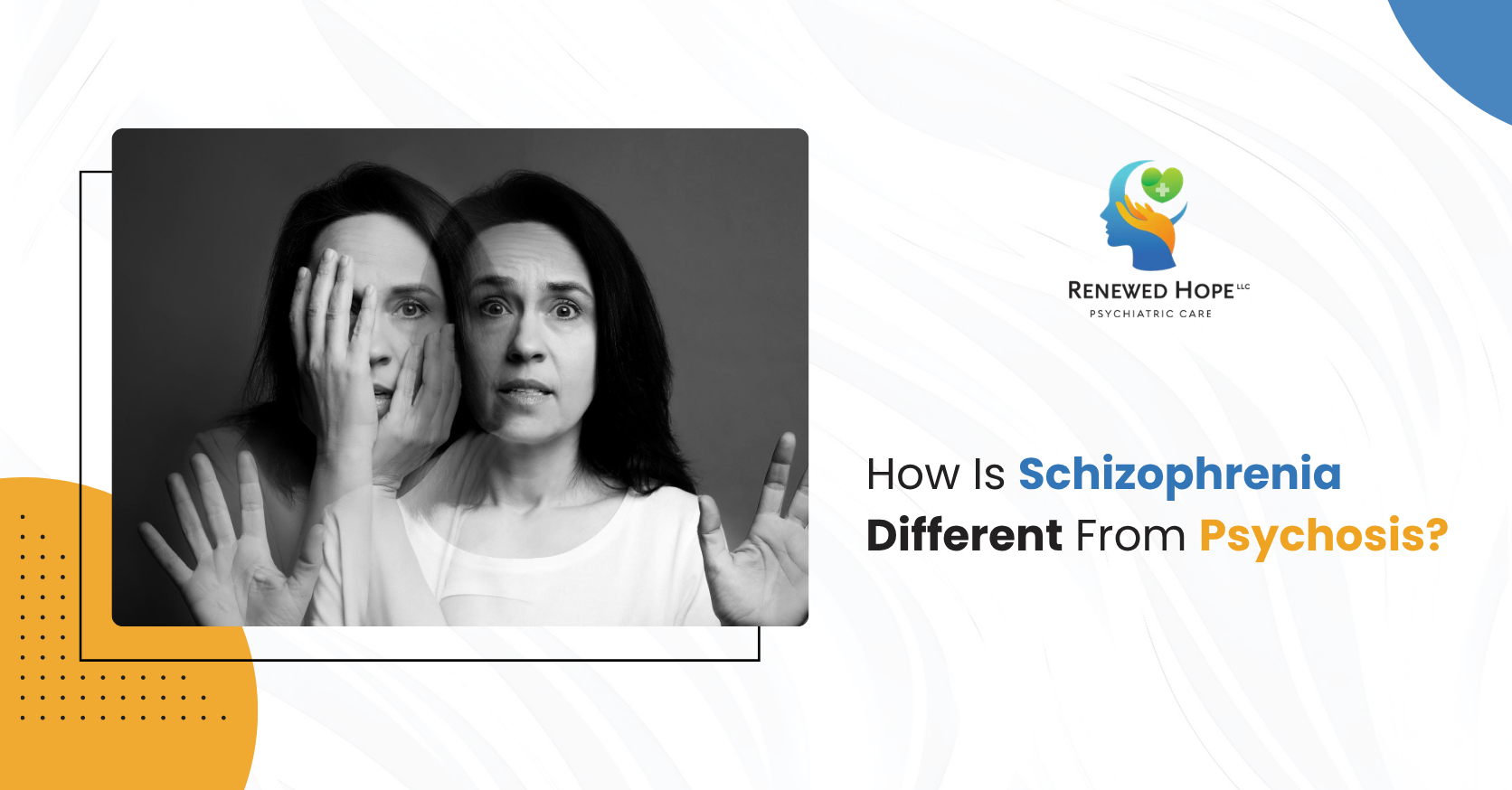
Many people use the words psychosis and schizophrenia to mean the same thing, but they are actually different. Learning how they differ is a great first step toward understanding mental health.
If you or someone you love is facing these challenges, you do not have to walk this path alone.
At Renewed Hope Psychiatric Care, we help individuals and families better understand mental health conditions and find treatment options that support recovery and long-term wellness.
What Is Psychosis?
Let’s start with psychosis. Psychosis is not a disease by itself. It is a set of symptoms. It happens when your mind has trouble knowing what is real. Your thoughts get mixed up. Your senses might play tricks on you. It can feel like a break from reality.
People experiencing psychosis may have Hallucinations:
- Seeing things that aren’t there
- Hearing voices
- Feeling sensations on their skin that aren’t real
- Smelling odors that others do not
They may also have delusions. A delusion is a strong belief that remains unchanged even when presented with facts. Examples include:
- Believing someone is following them
- Thinking they possess special powers
- Assuming the TV is sending them secret messages
During psychosis, a person’s speech might become difficult to understand. They may:
- Jump between topics
- Combine words that don’t make sense
Behavior can also change. They might:
- Become very still
- Act in an agitated manner
- Show little or no emotion
- Withdraw from social interactions
Psychosis can affect anyone. It can last for a short time or continue for a longer period.
The key point is this. Psychosis is a symptom. It is like a red flag. It tells us that something is wrong in the brain. But it does not tell them exactly what.
What Is Schizophrenia?
Schizophrenia is a long-term mental health disorder. It affects how a person thinks, feels, and acts. This serious condition can make someone feel out of touch with reality, but it’s more complex than that.
This illness often starts when people are young adults. It can make daily life hard.
Psychosis: A Core Feature
Psychosis is a key part of schizophrenia. You cannot have schizophrenia without it. At some point, a person with this disorder will experience psychotic symptoms, such as:
- Hallucinations
- Delusions
So, psychosis is essential to this disorder.
Negative Symptoms
Schizophrenia also includes negative symptoms. This term may be confusing. It means something is missing rather than something bad. For example, a person with schizophrenia might:
- Do not show emotions
- Speak in a monotone voice
- Avoid eye contact
- Lack of motivation
- Neglect personal hygiene, like not bathing or changing clothes
- Lose interest in life
- Withdraw from friends and family
These are all negative symptoms.
Cognitive Symptoms
In addition to negative symptoms, there are cognitive symptoms. These affect thinking. A person with schizophrenia might:
- Have trouble focusing
- Struggle to pay attention
- Experience memory issues
- Find it hard to plan or organize tasks
- Have difficulty understanding information
These symptoms can make school or work very tough.
Schizophrenia is a package deal. It includes psychosis and other troubling symptoms. These symptoms usually last for more than six months. It is a complex brain disorder.
How Is Schizophrenia Different from Psychosis? Key Differences
To sum it up:
- Psychosis is a temporary state. It is an episode of losing touch with reality.
- Schizophrenia is a chronic condition. It lasts a lifetime and includes psychosis as one part of the disease.
A person can have psychosis without having schizophrenia.
For example, a person who has not slept for a long time may have psychosis. After they rest, the psychosis may go away.
But a person with schizophrenia will usually have psychosis at some time, along with other symptoms.
Other Reasons for Psychosis
It is important to know that there are many other reasons for psychosis. One of these is schizophrenia. If you or someone you know experiences a psychotic episode, it may not be schizophrenia. Possible causes include:
Mood Disorders
- Severe depression may result in psychosis.
- Bipolar disorder can lead to a manic attack or psychosis.
Brain Injuries
Psychosis can also be brought on by illnesses such as strokes or dementia.
Extreme Grief
Losing a loved one can cause a brief psychotic break.
Getting the right diagnosis is crucial. You can never cure an unknown illness.
The right treatment depends on the right diagnosis.
How Schizophrenia Is Diagnosed
Diagnosing schizophrenia needs a detailed mental health assessment. At Renewed Hope Psychiatric Care, we’ll check your symptoms, personal history and medical records. We will also look at how your symptoms impact your daily life.
There isn’t a single test for schizophrenia. Providers look for symptom patterns and how long they last.
A diagnosis may consider:
- Hallucinations or delusions
- Changes in thinking and behavior
- Emotional and social challenges
- Duration of symptoms
- Impact on daily life
Early evaluation is crucial. With proper support, many with schizophrenia can manage symptoms and reach their goals.
Treatment Options for Psychosis and Schizophrenia
At Renewed Hope Psychiatric Care, we provide caring mental health services. Our focus is on helping those with psychiatric challenges. Treatment is based on individual circumstances, symptoms, and objectives.
Some of the common treatments involve:
Medication management can reduce symptoms such as hallucinations, delusions and mood swings. A psychiatrist or qualified health professional will check how well the medications work. They will make changes if needed.
Therapy and counselling can help a person understand their symptoms, establish coping mechanisms, improve relationships, and reduce stress.
Lifestyle support is additionally vital. Good habits and healthy support systems, sleep habits and coping mechanisms can improve overall health.
The best results occur with personalized treatment. Treatment must be individualized and take into account the fact that everyone’s experience of psychosis and/or schizophrenia is different.
When Should You Get Help?
Talk to a mental health provider if someone:
- Hears or sees things that others do not
- Believes things that are not true
- Seems very confused
- Stays away from family and friends
- Has big changes in behavior
- Cannot do daily tasks
Getting help early can lead to better care.
Supporting Someone with Schizophrenia or Psychosis
Family and friends can offer essential support. Here are some useful steps:
- Listen without criticism
- Promote treatment
- Educate yourself on symptoms
- Establish a secure environment
A person with psychosis may feel scared. Kind communication and patience develop trust.
Support from mental health professionals helps families grasp what their loved one is going through. They can learn how to offer real help.
Finding the Right Mental Health Support
While schizophrenia and psychosis are connected, they are not the same.
Psychosis is a symptom. It can happen for many reasons.
Schizophrenia is a long-term mental health illness. It can include psychosis and other symptoms.
At Renewed Hope Psychiatric Care, we are here to help you find clarity and healing.
If you’re unsure about what you or a loved one is experiencing, call us. Visit our website. We can help you understand it better. We’ll clarify the differences. Most importantly, we’ll get you in contact with the right help. You’re not alone. Your renewed hope starts today.
FAQs
Is schizophrenia curable?
There is no cure right now. But treatment can help people live well.
Is psychosis an emergency?
Yes, if someone is confused or at risk of harm, seek help immediately.