
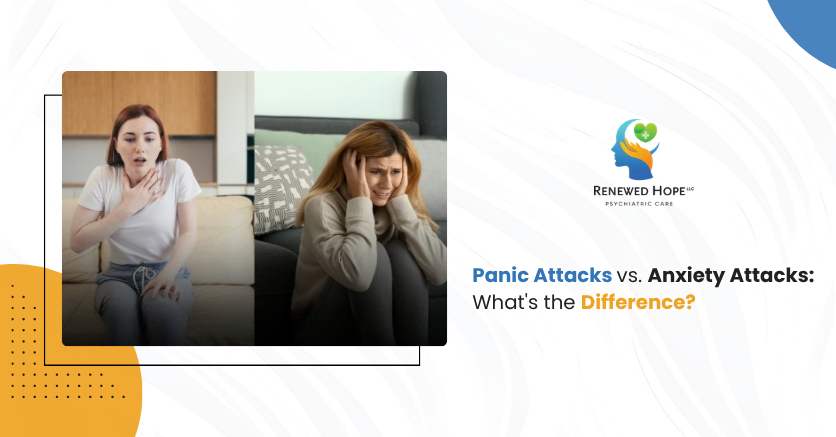
Have you ever felt your heart suddenly race out of nowhere? Or maybe you have felt a growing wave of worry that would not stop? Many people use the words “panic attack” and “anxiety attack” like they mean the same thing.
But in the world of mental health, they are actually quite different.
Knowing the difference can help you understand what is happening in your body and mind. It can also help you know when to reach out for support.
We provide a framework for mental health education at Renewed Hope Psychiatric Care and a place to seek effective treatment.
Let us learn about each condition.
What Is a Panic Attack?
A panic attack is a sudden surge of intense fear or discomfort, often without warning. It activates the body’s alarm system, making one feel as if something terrible is imminent, like a heart attack or a loss of control.
Common symptoms include:
- Fast heartbeat
- Chest pain or tightness
- Shortness of breath
- Dizziness or faintness
- Sweating
- Shaking or trembling
- Feeling detached from reality
- Fear of losing control
- A strong sense of danger
Panic attacks typically peak in several minutes. They are very frightening, but not inherently dangerous. The body is sending a signal of threat even if there is no real threat.
What Is an Anxiety Attack?
An anxiety attack is a state of heightened anxiety, fear, or stress that develops due to continuous concerns. It often happens because of a stressful situation or ongoing problems.
For example, someone may experience an anxiety attack before:
- A major work presentation
- A medical appointment
- Financial problems
- Relationship challenges
- Other stressful events
Common anxiety attack symptoms may include:
- Constant worry
- Restlessness
- Feeling tense or nervous
- Trouble concentrating
- Irritability
- Muscle tension
- Difficulty sleeping
- Feeling overwhelmed
Anxiety attacks often develop more slowly than panic attacks. They can persist longer due to a continued sense of stress/fear.
The Main Difference Between Panic Attacks and Anxiety Attacks
The biggest difference between panic attacks and anxiety attacks is how they begin and how intense they feel.
Anxiety Attack
- Builds up gradually
- Usually has a clear trigger like stress or worry
- Symptoms can last for hours or days
- Symptoms are often less intense
Panic Attack
- Comes on suddenly and without warning
- May have no clear trigger
- Reaches its highest point within minutes
- Can feel like a medical emergency
Both experiences may disrupt life and need attention.
Why Do Panic Attacks Happen?
The exact cause of panic attacks is not always clear. They can happen to anyone. Researchers estimate 11% of Americans have a panic attack annually. Sometimes they happen once and never again. Other times, they keep happening, which might be a sign of panic disorder.
Research has shown that panic attacks may be linked to how the brain’s alert system works. A study funded by the NIMH found that a hormone in the brain circuit that controls vigilance may play a role in panic disorder. This means that for some people, the brain’s “danger” alarm might be more sensitive than it should be.
Why Do Anxiety Attacks Happen?
Anxiety attacks are often linked to ongoing stress. Your body remains in an alert, conditioned state when you are worried about something for a long period of time. This worry can become so heavy that it feels like an attack.
Can Panic Attacks and Anxiety Attacks Feel the Same?
Yes. They can feel very similar.
Both can cause:
- Fear
- Racing thoughts
- Body discomfort
- A strong need to escape
Because the symptoms can overlap, many people are not sure what they are experiencing.
A mental health professional can make a diagnosis, help you figure out symptoms and guide you.
At Renewed Hope Psychiatric Care, we take time to understand each person’s experience. We work with individuals to identify the causes of anxiety symptoms and create personalized treatment plans.
Why Knowing the Difference Matters?
It’s important to recognize how you’re feeling, because that’s the first step to feeling better. When you know the difference between a panic attack and an anxiety attack, you can do these things:
- Stop blaming yourself. These are no indicators of weakness. These are actual events experienced by many.
- Describe feelings to others. When you have the right words, it is easier for family and friends to understand and help you.
- Know when to get help. Both panic attacks and anxiety attacks can be treated. Do not have to suffer from them for a lifetime.
When to Seek Help
Both panic attacks and anxiety attacks can be scary. However, do not face them by yourself.
You should consider reaching out to a professional if:
- Your attacks keep happening
- You are always worried about having another attack
- Your symptoms get in the way of daily life
- You avoid places because you are afraid of having an attack
Treatment Options for Panic Attacks and Anxiety Attacks
The good news is that both panic attacks and anxiety attacks can be treated. Many people improve with the right support and treatment approach.
Renewed Hope treats a wide range of conditions, including anxiety disorders and more.
We take a holistic and evidence-based approach to mental health. This means we look at the whole picture of your health, not just your symptoms. We offer comprehensive psychiatric evaluations to understand what is going on. We also provide medication management to help with symptom relief. We teach:
- Stress management skills
- Healthy coping tools
- Sleep and relaxation support
Our services include telehealth and in-person visits, making it convenient to obtain care wherever you are. We serve patients in Missouri and Iowa. We also offer on-site psychiatric evaluations for nursing home residents.
Final Thoughts
A panic attack differs from an anxiety attack in the onset of symptoms, the progression of symptoms and the circumstances of their occurrence.
Anxiety attacks more often develop over a long period of time with feelings of worry, whereas panic attacks tend to come on quickly and involve sudden, extreme threat.
Both experiences are real and can be overwhelming. It’s important to understand the difference to know what is going on and how to sort it out.
Whether it is due to anxiety or panic symptoms, professional help can offer guidance, treatment and hope for recovery. Renewed Hope Psychiatric Care is committed to walking beside you every step of the way.
Our purpose is to help you become stronger from the struggle, healed from the pain and clear on what’s needed to reach the life you desire.
Call or visit our website to find out more information.
FAQs
Can children have panic attacks?
Yes. Children can have panic attacks too. Panic attacks and anxiety problems can happen at any age.
Can you have a panic attack and an anxiety attack at the same time?
Yes. Some people may feel long periods of anxiety and then have a sudden panic attack. Both can happen together.