
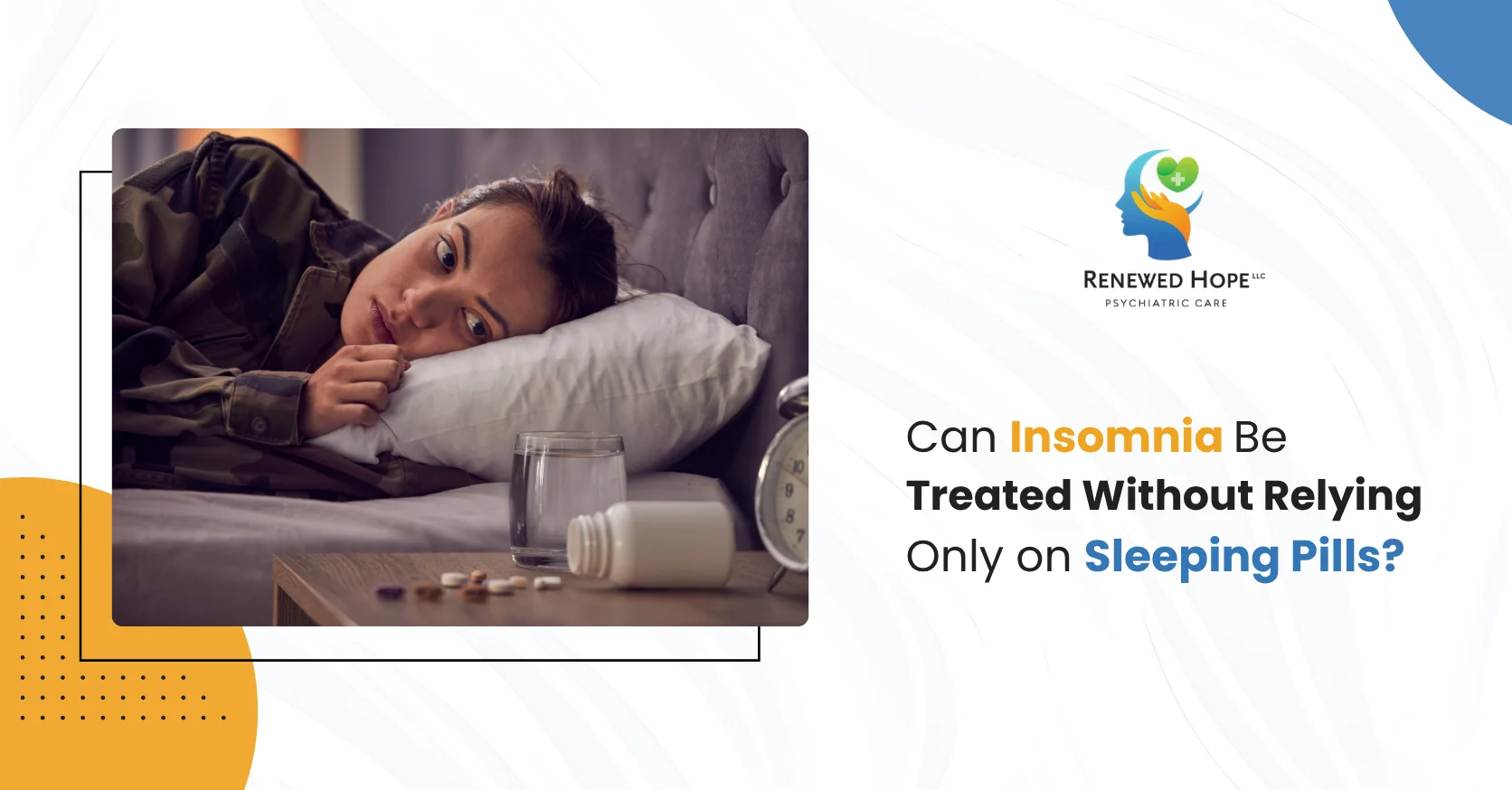
Are you tired of lying awake at night? Do you stare at the ceiling and wait for sleep that never comes? If you do, you know how hard it is. A bad night of sleep makes the next day feel impossible. You might feel cranky, slow and very tired.
Many people face this problem every single night. This problem has a name. It is called insomnia.
When you cannot sleep, you might think of one quick fix. You might think of taking a sleeping pill. Sleeping pills can indeed help you close your eyes for a few hours. But they are not the only choice you have. In fact, relying only on pills might not be the best idea for your long-term health.
So, can insomnia be treated without relying only on sleeping pills? Let’s explore it.
What Is Insomnia?
Insomnia means having trouble falling asleep, staying asleep, or getting good sleep even when you have enough time and a good place to rest.
- Short-term insomnia can happen after stress or a change.
- Long-term insomnia happens at least 3 nights a week for 3 months or more.
Because poor sleep can have many causes, treatment should look at the full picture. A mental health visit can help find problems that may be making sleep harder.
Renewed Hope Psychiatric Care provides comprehensive psychiatric evaluations and care for adults with insomnia and other mental health concerns.
Can Insomnia Be Treated Without Sleeping Pills?
Yes. Medicine is not the only way to manage insomnia. Many people can improve their sleep through behavioral and psychological treatments, changes in sleep habits and treatment of conditions that may be contributing to insomnia.
For long-term insomnia, cognitive behavioral therapy for insomnia, or CBT-I, is often recommended as a first treatment. CBT-I helps change thoughts and habits that make sleep harder and teaches ways to relax.
Medicine may still help some people as part of a larger care plan. The choice depends on the person, the cause and other health needs. A provider can help decide what is safe and useful.
How CBT-I Can Help Treat Insomnia
CBT-I is focused on skills you can use outside the treatment visit. It may include:
- Sleep education
- Relaxation techniques
- Changes to the amount of time you spend in bed
The goal is to help connect your bed with sleep instead of worry and wakefulness.
One part may also address thoughts such as, “I will never sleep tonight.” Learning to respond to these thoughts in a calmer way can reduce fear around bedtime.
CBT-I is often provided over several weeks and can be offered in person, by phone, or online.
Healthy Sleep Habits Matter
Simple habits can support better sleep.
1. Keep a Consistent Sleep Schedule
Try to go to bed at the same time every night. Wake up at the same time every morning. When you do this, your body learns when it is time to rest.
2. Make Your Bedroom Sleep-Friendly
Make your bedroom dark and quiet. A cool room helps you sleep better than a hot room. Make your bed a place just for resting.
3. Turn Off Your Screens
Phones and televisions give off a bright blue light. This light tricks your brain into thinking it is daytime. Try reading a paper book before bed instead.
Managing Stress Can Support Better Sleep
Stress and poor sleep often affect each other. When your mind is busy at night, falling asleep may feel harder. Learning better ways to manage stress can make bedtime feel less difficult.
Renewed Hope Psychiatric Care includes stress management techniques, education, support and healthy routines that include sleep hygiene and relaxation techniques. Its care plans are tailored to each patient instead of using one plan for everyone.
Look at the Reason Behind the Sleeplessness
Sometimes insomnia is linked with a bigger concern.
- Anxiety may keep your thoughts moving
- Depression may change your sleep pattern
- Trauma symptoms may make nighttime feel unsafe
- Stress can also make it hard to relax
This is why a full psychiatric evaluation can be useful.
Renewed Hope Psychiatric Care offers comprehensive psychiatric evaluations and medication management for adults. Finding the factors connected to poor sleep can help shape a more complete treatment plan.
Do You Need to Stop Sleeping Pills?
Not on your own. Before making any changes in dose or discontinuing any sleep medicine you are taking, be sure to consult with your physician.
Some medications require a tapering phase, and others may be prescribed for limited durations.
Treatment may be both medication and non-medication care. It can also change over time based on changing needs with improvement in sleep. The vision is towards safe and sustainable growth.
When Should You Ask for Help?
Talk with a healthcare provider when sleep trouble:
- Keeps affecting your daily life
- Happens often
- Leaves you very tired during the day
A sleep diary can be helpful. Write down when you go to bed, when you wake up, naps, caffeine, alcohol, exercise and how you feel during the day.
Renewed Hope Psychiatric Care offers in-person appointments in St. Charles and convenient telehealth appointments are available. Our plans are built around each person’s needs and goals.
A Better Night Can Start with More Than Medicine
Sleeping pills may be helpful for some people, but it’s not the only way to get a good night’s rest. Treatment can involve behavioral health and sleep education, care of sleep-related mental health needs, healthy sleep habits and CBT-I.
If insomnia is wearing you down, you do not have to keep guessing about what to do next. A psychiatrist can provide an analysis that will shed light on what may be impacting your sleep and create a plan to suit you.
Renewed Hope Psychiatric Care offers adult psychiatric services, medication management, stress support and healthy routine guidance regarding education and sleep for people seeking a more complete approach to mental wellness.
Call us today at 636-489-3555 ext. 101 to schedule an appointment or consultation. Same-week psychiatric appointments are also available. We are now accepting new patients.
A better night can start with more than medicine.
FAQs
How much sleep do adults need?
Most people require 7-9 hours per night, although there are variations. The quality of sleep is as important as the number of hours.
Does telehealth work for insomnia treatment?
Yes. Telehealth can be a convenient way to receive psychiatric evaluations, follow-up care and CBT-I. Renewed Hope Psychiatric Care offers telehealth appointments along with in-person appointments in St. Charles.